14, January 2023
Southern Cameroons Crisis: Amba fighters kill police in Kumba 0
There is a general belief that things are getting better in the country’s two English-speaking regions as some calm has returned but it is obvious that it will take time for genuine and sustainable peace to return to the two restless regions.
The new-found peace may still be hiding some dangers and it will not be out of place to see some destruction and killings in many parts of the two English-speaking regions of the country.
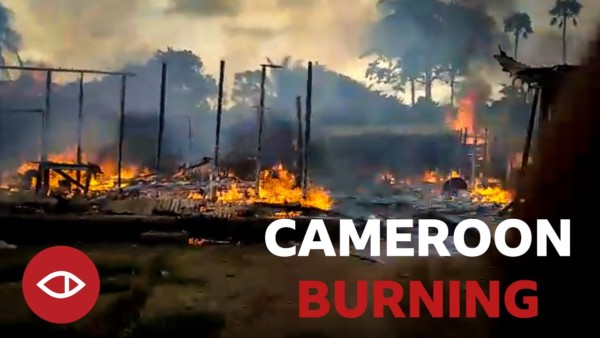
In Kumba, a police officer was brought down yesterday by people suspected of being Amba fighters and this incident is a sordid reminder of a past when it was a death sentence to be a uniformed officer in the Northwest and Southwest regions of Cameroon.
While confrontations between the military and Southern Cameroonian fighters are rare today, it cannot be said that the war, which has raged for more than five years, is over.
Today, many cars can go to Mamfe, Ekondo-titi and many towns in the two English-speaking regions, but the fear of being caught up in crossfire is still there as the issues which triggered the Southern Cameroons crisis have not yet been addressed.
More killings have also been taking place in the Northwest region. Two soldiers were also sent to an early grave this week and this underscores the fact that until genuine dialogue takes place, Cameroon might never come out of its madness of killings.
If the killings have reduced, it is more because government troops have been ordered not to kill like they used to kill in the past.
Their recklessness with their guns is to blame for the streams of blood which have flowed in the two English-speaking regions of the country.
Actions by Southern Cameroonian fighters were just acts of retaliation whenever the sex-starved, alcohol-inflamed and trigger-happy soldiers went on a killing spree.
The Southern Cameroons crisis which started as a protest by teachers and lawyers in 2016 has sent more than 7,000 Cameroonians to an early grave, with soldiers accounting for 40% of the deaths.
The number of soldiers and civilians living with mental, physical and psychological scars will never be known as the Yaoundé government is not in the business of keeping statistics and when it even tries its hands at that, its old habit of lying always stands in the way, making it hard for any reasonable person to trust its data.
Economically, the conflict has driven the sick economy to the bottom of the abyss. Government corporations like the CDC, PAMOL and others are still struggling and the government is too cash-strapped to engineer any sustainable solutions for these ailing corporations.
The road to economic recovery is tortuous and replete with bumps. The government is desperate and has resorted to tough financial and fiscal measures to refill its empty coffers, measures which are leaving many desperate and poor.
Over the last few weeks, the cost of government services to the citizens has gone up. Fuel prices have gone up and a bottle of gas now costs CFAF 10,000, well beyond the reach of many families.
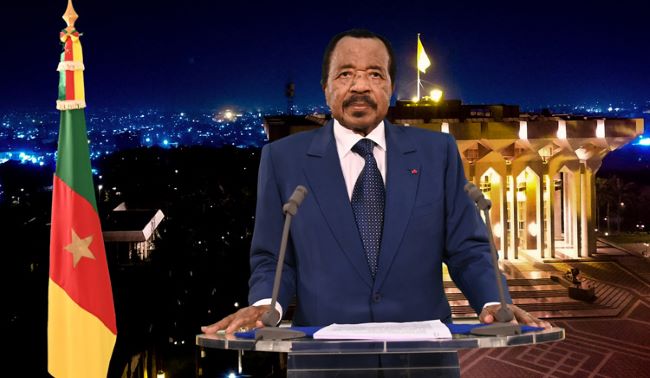
The rationing of fuel is now a daily occurrence even in the country’s capital, Yaoundé. The Biya government is out of cash and it is using even unorthodox means to sustain itself in power.
It is being rumored that school fees in government universities will soon rise from CFAF 50,000 to CFAF 300,000 and this will be beyond the reach of many desperate and helpless families which view their children’s education as a visa out of grinding poverty.
Cameroon is going through a lot and it is becoming clearer by the day that Biya, the man many thought would take the country to the land of promise, has driven the country into a rabbit hole which will keep generations of Cameroonians in desperation for a long time.
By Soter Tarh Agbaw-Ebai









14, January 2023
Southern Cameroons Crisis: Doctors Without Borders Welcomes Release of Staff Accused of Aiding Ambazonians 0
Doctors Without Borders, known by its French abbreviation MSF, welcomed Cameroon’s release of five members of its staff detained for a year on charges of helping separatists. MSF maintains it helps anyone who needs medical care and says it will only resume work in separatist areas with government security guarantees.
The group this week welcomed the military tribunal’s December 29 acquittal of the five workers – four of them Cameroonians and one Indian.
The military arrested two of the staff in December 2021 in Nguti, a southwestern town on the border with Nigeria, while they were transporting a patient with a gunshot wound to a hospital.
The military said the patient was a separatist and the next month arrested two more MSF staff members, accusing them of collaboration.
The French aid group said they abide by medical ethics of helping all in need but could not continue in the area under the threat of arrest.
In May, MSF suspended operations in Cameroon’s southwest.
Despite the dropped charges, MSF’s Operations Manager for Central Africa Sylvain Groulx said they cannot yet resume the needed aid work.
“We are obviously waiting to try to engage with the government so that we may resume our activity and we hope that they [the government] will be willing to sit down and discuss with us because these are lifesaving activities that we had to stop. It is very difficult for ministry of health ambulances to access certain areas. We were able to negotiate our access with all the actors and we were exceptionally allowed to do that, saving many lives,” said Groulx.
Paul Atanga Nji is Cameroon’s minister of territorial administration. While not specifically mentioning MSF, he told state broadcaster CRTV Tuesday that any aid groups helping rebels would be charged in court.
He said they will not allow aid groups that are believed to be separatist accomplices to operate in Cameroon. Nji said Cameroon’s military is working hard to bring order in the restive western regions. He said government hospitals have proven they have all that it takes to save the lives of people who need assistance.
Hospitals in Cameroon’s conflict areas have struggled to maintain services and staff, who say they have been victims of both military and separatists.
Nineteen-year-old University of Buea student Benedict Luma said MSF saved his uncle’s life in 2020.
“My uncle bled excessively when he was shot in the leg. Everyone was afraid he would die because there was no hospital around. Our neighbors advised us to call Doctors Without Borders on the phone, and in less than an hour, their ambulance came to save my uncle’s life,” he said.
Doctors Without Borders has provided medical aid in Cameroon to victims of Boko Haram Islamist militants along the northern border with Nigeria since 1984.
Until last May it also provided surgical care and malaria and COVID-19 treatment in Cameroon’s restive South-West region.
The aid group says it treated more than 1 million patients in Cameroon in 2020 alone.
Cameroon’s English-speaking separatists are fighting to break away from the French-speaking majority that it says treats them as second-class citizens.
Since the conflict broke out in 2017, the UN says more than 3,500 people have been killed and 750,000 displaced.
Source: VOA