11, February 2020
Twin Poll: Several cases of fraud reported by observers and political parties 0
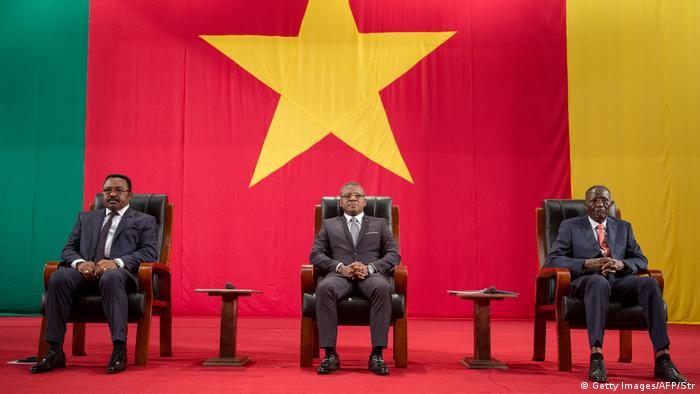
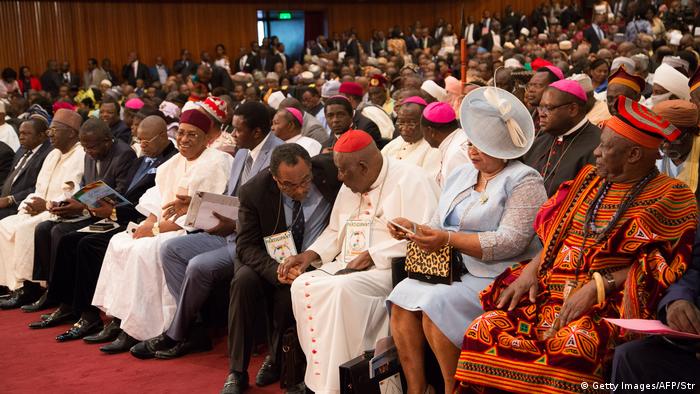
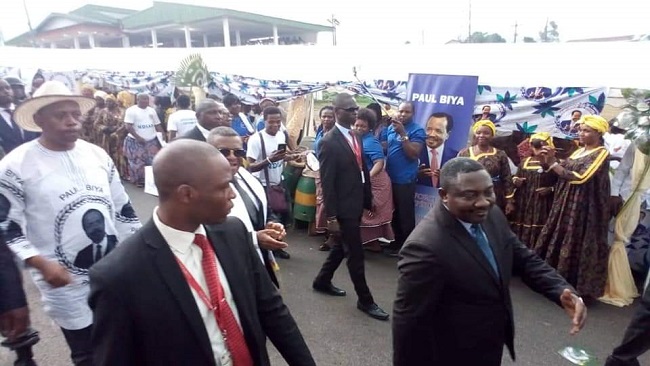
The vote count in Cameroon continues after Sunday’s parliamentary and municipal elections, marred by the boycott in the central African country’s two English-speaking regions.
Several cases of fraud have been reported by observers and political parties.
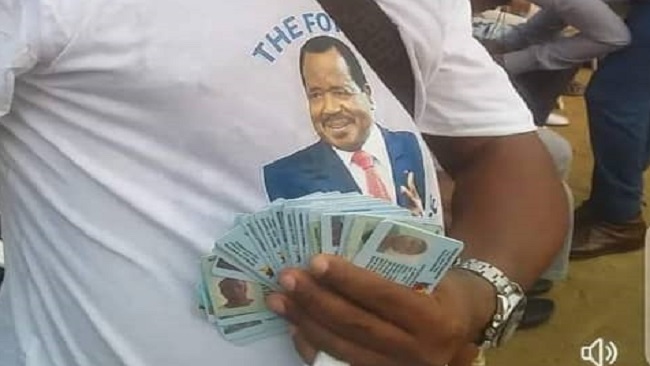
“The security forces arrested a lady at a polling station in Douala with around 40 voter ID cards in her possession. She is being interrogated, “Erik Essousse, director-general of Elections Cameroon (Elecam), told Anadolu Agency on Sunday.
He added that the head of a polling station in Kumba, Southwest Region, was arrested due to alleged fraud.
National and international observers said that several people did not take part in the elections, either because of the Anglophone crisis or out of respect for the boycott called by opposition leader Maurice Kamto.
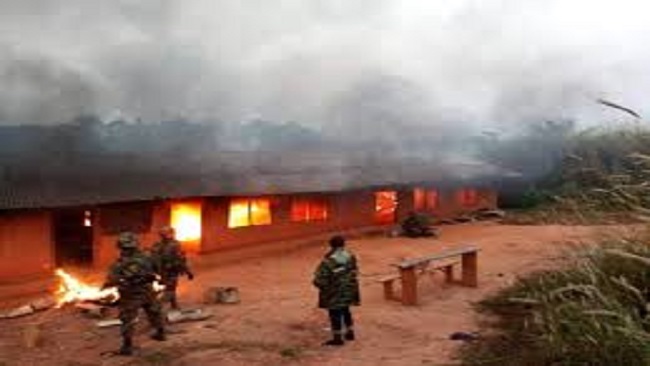
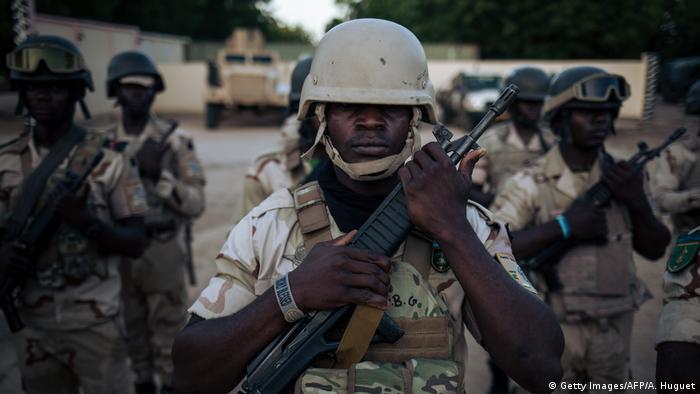
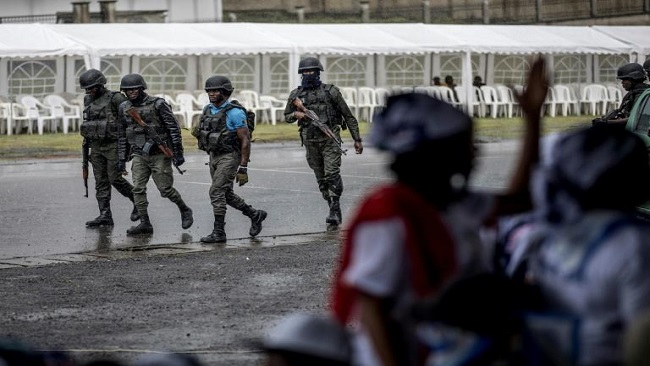
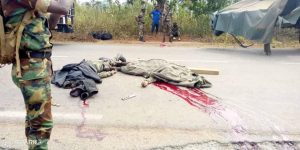
In the English-speaking regions, clashes took place between security forces and separatist groups, who also called for a boycott.
“I believe that the voter turnout is far below that of the presidential election last October,” said Maxi Mbe Ngo, president of the Central Africa Human Rights Defenders Network (REDHAC).
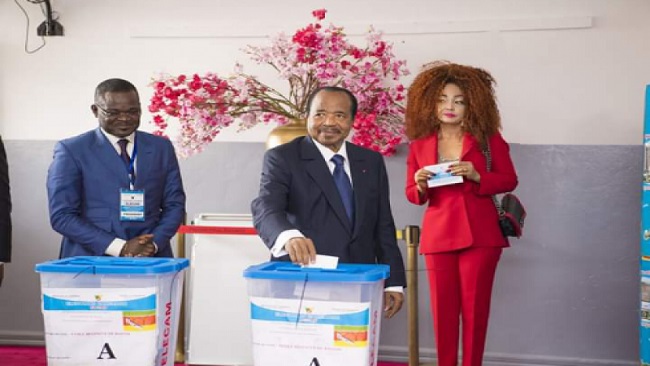
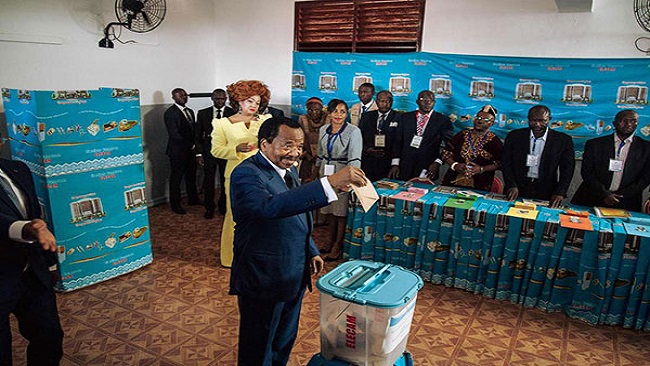
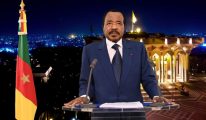
After casting his vote in the capital Yaounde, Cameroonian President Paul Biya called on the citizens to fulfill their civic duty by going to vote, “contrary to the calls for the boycott of certain small political parties.”
The results of the municipal elections will be declared three days after the elections, while the results of parliamentary polls will be announced by the Constitutional Court within 20 days.
Grievances
Cameroon has been marred by protests since 2016, with residents in English-speaking regions saying they have been marginalized for decades by the central government and the French-speaking majority.
The protesters are calling for a return to federalism or independence of English-speaking Cameroon.
Reports claim that hundreds have since been killed and several thousand displaced since clashes erupted roughly three years ago.
A national dialogue took place last year that focused on the grievances of the English-speaking populations of the Northwest and Southwest regions of the Central African country.
In Nov. 2019, Kamto called for a boycott of the country’s legislative and municipal elections. He said the country is not ready for elections.
The elections had been postponed twice due to growing threats from armed separatists in the country’s two English-speaking regions.
Source: Anadolu Agency








11, February 2020
The educational qualification of African leaders in juxtaposition to their performances is an irony: The Case of Biya and Co. 0
The educational qualification of African leaders in juxtaposition to their performances is an irony. Africa has the most educated leaders in the world, and the continent continues to experience plodding progress. Many critics and social commentators have attributed this to the high level of corruption evident within African governments.
Interestingly, former Zimbabwe president, Robert Mugabe was considered the most educated president in the world while he was alive. On paper, he was the most qualified man on earth to assume the position of president.
Sadly, history does not speak too well of his achievements in Zimbabwe after his 40-year rule.
One thing that the situation has proven is that ‘educational credentials alone do not make a good leader’. While, we may agree that education is a fundamental ingredient in governance – the evidence or lack of it has made very little difference in the African context.
Below are the top 10 most educated presidents in Africa 2020:
1. President John Pombe Magufuli, TANZANIA
President Magufuli is a seasoned educationist and Chemist. Nicknamed the “Tanzanian bulldozer”, Dr. John Magufuli became the president of Tanzania in 2015. He was a former school teacher; he has a Ph.D. in Chemistry.
Academic Qualifications:
• BSC in Chemistry from University of Dar es Salaam
• Master’s degree in Chemistry from University of Dar es Salaam
• Doctorate in Chemistry from the University of Dar es Salaam
2. King Mohammed VI, MOROCCO
King Mohammed VI took over the throne of Morocco in 1999 after the death of his father, King Hassan. As king, he is the superpower of Morocco and is responsible for appointing a Prime Minister in the country.
Academic Qualifications:
• Bachelor’s Degree in Law from the Mohammed V University at Agdal.
• Ph.D. in Law from the French University of Nice Sophia Antipolis.
3. President Peter Mutharika, MALAWI
President Mutharika is a renowned international Economic Law expert; his remarkable academic qualifications were a big reason behind his success at the presidential polls in 2014. He served as an adviser to his elder brother, ex-President Bingu Wa Mutharika who died in 2012.
Academic Qualifications:
• Law Degree from the University of London.
• Master of Laws Degree (LL.M) from Yale University.
• Doctor of the Science of Law Degree (JSD) from Yale University.
4. President Alassane Ouattara, IVORY COAST
President Alassane has been at Ivory Coasts’s helm of leadership since 2010. He is a seasoned economist and financial expert. Critics argue that his understanding of economics has significantly impacted and sustained the economy of the Ivory Coast, making it one of the best in terms of economic growth in Africa.
Academic Qualifications:
• Bachelor of Science Degree from the Drexel University, in Philadelphia, Pennsylvania.
• Master’s Degree in Economics from the University of Pennsylvania.
• Ph.D. in Economics from the University of Pennsylvania.
5. President Ibrahim Boubacar Keita, MALI
Ibrahim Keita has ruled Mali since 2013. According to reports, his administration focuses on one key goal, and that is to eliminate corruption from the country. For this reason, he swears not to tolerate even the slightest dishonesty.
Academic Qualifications:
• Ibrahim studied at the Lycée Janson-de-Sailly in Paris and Lycée Askia-Mohamed in Bamako.
• He furthered at the University of Dakar, the University of Paris I and the Institut d’Histoire des Relations Internationales Contemporaines (IHRIC; Institute of the Modern History of International Relations).
• Ibrahim Keita has three degrees in Political International Relations, History, and Political Science, including graduate degrees in Political Science and International Relations.
• He also has a Master’s Degree in History
6. President Faure Essozimma Gnassingbe, TOGO
Faure Essozimma Gnassingbe became the president of Togo on 24 April 2005 and has remained so ever since then. He grabbed the power following his father Gnassigbe Eyadema’s death, who had already ruled the country for about 38 years.
Academic Qualifications:
• Bachelor’s Degree in Financial Management from the Sorbonne, in Paris.
• Master’s Degree in Business Administration from George Washington University in the United States.
7. George Weah, LIBERIA
Before venturing into politics, George Weah was a football player famously known as one of Africa’s best players of all time. He had played in the UEFA Champions League as well as the English Premier League. He also became the first and only African player to win FIFA world’s best player and other noteworthy awards.
Academic Qualifications:
• BA in Sports Management from Parkwood University, London (Note that this certificate is honourary, and not earned from the study)
• Degree in Business Administration from Devry Univesity Maimi
• Master’s Degree in Management from Keller’s Graduate School of Management.
8. Namibian President, Hage Geingob
Hage Geingob is the president of Namibia. He took power in 2015 after serving in different leadership positions.
Academic Qualifications:
• Bachelor of Arts from Fordham University, New York.
• Master of Arts in International Relations from Graduate Faculty of The New School, New York.
9. President Jorge Carlos de Almeida Fonseca, CAPE VERDE
President Jorge Forseca is a Cape Verdean politician, lawyer and university professor who has been President of Cape Verde since 2011.
He served as Minister of Foreign Affairs from 1991 to 1993.
Academic Qualifications:
• Graduate in Law, University of Lisbon, Portugal
• Masters in Legal Sciences Faculty of Law, University of Lisbon, Portugal
10. President Paul Biya, CAMEROON
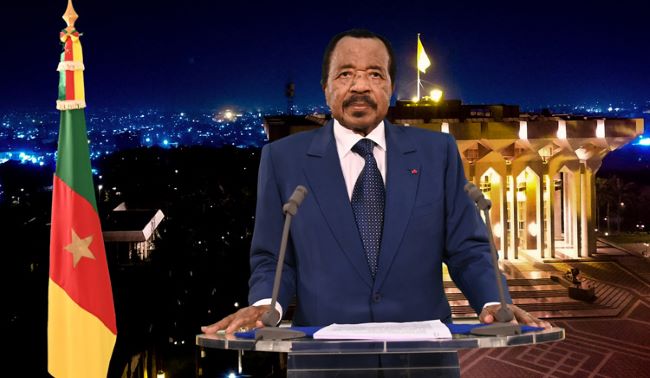
President Paul Biya is the second President of the State of Cameroon. He assumed office on 6 November 1982 following the resignation of President Ahmadou Ahidjo.
Academic Qualifications:
• BA in Law and Political science, University of Paris, Paris, France, 1960
• Diplome, Institut d’Etudes Politiques, Paris, 1961
• Diplome, Institut des Hautes Etudes d’Outre-Mer, 1962
• Diplome, Etudes Superieures en Droit Public, 1963
Source: Africanexponent