7, February 2021
How Congo Kinshasa’s Tshisekedi loosened Kabila’s grip on power 0
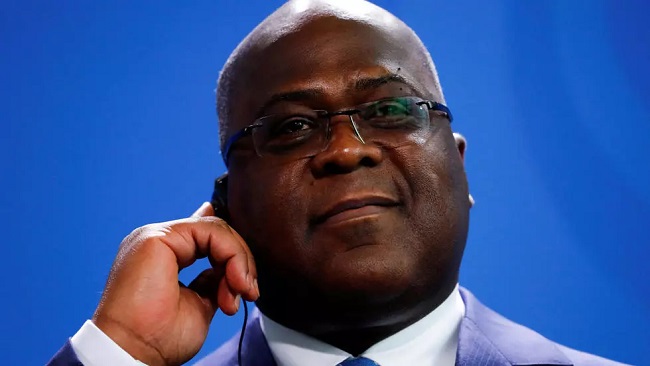
Two years after his election, Congolese President Felix Tshisekedi has finally taken control, loosening his predecessor Joseph Kabila’s seemingly indestructible iron grip on power behind the scenes.
It seemed impossible for Tshisekedi to climb out from underneath Kabila’s shadow when he acceded to the top job in January 2019 – one month after coming out ahead in presidential elections amid doubts from electoral observers that he had really won more votes than Kabila’s arch-rival Martin Fayulu.
Tshisekedi had little room for manoeuvre: in power since 2001, Kabila had tightened control of DR Congo’s major institutions: the army, the intelligence services, the constitutional court and the electoral commission. Kabila’s party the Common Front for Congo (FCC) controlled two-thirds of parliamentary seats, forcing Tshisekedi to form a coalition government with his own party in the minority.
But two years later, Tshisekedi has managed to loosen Kabila’s lingering grip. The pro-Kabila head of the Senate resigned on Friday as MPs prepared a censure motion against him. Then the vast majority of FCC MPs switched their allegiances and joined Tshisekedi’s new political group the Sacred Union, giving it a large majority in the lower chamber.
‘Never any trust’
These MPs pushed out pro-Kabila Prime Minister Sylvestre Ilunga Ilunkamba with a censure motion on January 27 – a month after they ousted the head of the National Assembly.
“There was never any trust between Tshisekedi and Kabila,” said Trésor Kibangula, an analyst at research foundation the Congo Study Group. “Each side has always been trying to diminish the other.”
Hence a year and a half of backbiting and power plays followed Tshisekedi’s inauguration. In 2020 the president’s camp banned some Kabila family members, including his once-powerful twin sister Jaynet, from travelling. Tensions rose to boiling point in July, when Tshisekedi appointed three new judges to the Constitutional Court amid the then prime minister’s absence. Kabila’s camp was outraged and refused to attend the swearing-in ceremony. In early December, Tshisekedi announced the end of the ruling coalition that combined his presidency with an FCC-controlled parliament.
Tshisekedi had already prepared for this. His camp set up meetings in the summer to persuade Kabila supporters to back him. “We set out to bring disillusioned FCC MPs to our side,” said an anonymous member of Kabila’s camp.
Anger had been brewing there for several months. “The FCC was controlled by a clique who didn’t want to see new people rise to the fore,” said MP Patrick Munyomo, who has joined the Sacred Union.
In December, Tshisekedi threatened to dissolve the National Assembly if he did not get a majority – causing many MPs to worry about losing their jobs. “It was a good move, psychologically,” said MP Nsingi Pululu.
Tshisekedi and his allies deployed the carrot after this deft use of the stick. The head of his party the UPDS, Jean-Marc Kabund said he would “look out for the interests” of MPs defecting from the FCC.
“Many of them left out of opportunism, keen to get jobs,” said Marie-Ange Mushobekwa, a member of the FCC’s pro-Kabila “crisis committee”.
“I didn’t ask for a job – but I hope I get one,” Pululu said.
A range of corruption allegations emerged against both sides amid the defections – with each side accusing the other of “buying” parliamentarians with bungs of thousands of dollars and 4×4 cars.
“It is going on, although I refused to accept anything,” one FCC defector said. “I’m not saying there haven’t been any bank notes going around, but we haven’t been buying people’s consciences,” said a senior member of Tshisekedi’s camp.
Kabila redux?
Kabila has remained silent throughout this process. Since the dismissal of close ally Jeannine Mabunda as head of the National Assembly, he has been living in his farm in Katanga province near the Zambian border, far away from the political turmoil in the capital Kinshasa.
He had warned Tshisekedi that the National Assembly is a red line, but realised that “he’s not capable of reacting yet”, Kibangula said.
Kabila remains a powerful figure in DR Congo. He and his family control a nexus of more than 80 companies operating in almost every sector of the economy. Gécamines – the country’s largest mining company and biggest contributor to the state’s budget – is headed by one of the ex-president’s most loyal lieutenants, Albert Yuma.
Meanwhile Kabila enjoys significant support within the rank and file of the army and intelligence service: “Tshisekedi has more and more backing within the security forces, but it’s still not much compared to the support for Kabila,” Kibangula said.
With more than 100 MPs remaining loyal to the ex-president, the FCC is becoming DR Congo’s main opposition force. This would provide a springboard for Kabila to leap back into the fray. “Kabila has not left the world of politics,” said FCC spokesman Alain Atundu. “We’re now starting to put a battle plan in place.”
Source: France 24













9, February 2021
US: What you need to know as Trump’s second impeachment trial begins 0
The US Senate begins debate Tuesday on the unprecedented second impeachment of former US president Donald Trump as lawmakers decide whether he is guilty of inciting the deadly January 6 insurrection at the US Capitol.
US senators will step into uncharted territory when they sit in judgment of a president who is no longer in office but who remains a potent force in his party. The extraordinary proceedings will unfold in one of the chambers ransacked by an angry mob of Trump supporters who stormed Congress on January 6, seeking to halt the certification of President Joe Biden’s election win.
If convicted, the former Republican president could be barred from holding public office in the future, dealing a fatal blow to any hopes he may have of running again in 2024.
Here is a look at the basics of the trial and its broader implications.
What are the charges against Trump?
The 45th US president is accused of “inciting violence against the government of the United States” by using inflammatory language at a rally in Washington, DC, moments before his supporters launched the deadly attack on the Capitol.
One week after the siege, when Trump was still the sitting president, the House of Representatives formally impeached him for “high crimes and misdemeanors”. House members voted 232 to 197 in favour of impeachment, with 10 Republicans joining Democrats, making Trump the first president in US history to be twice impeached.
When will we get a verdict?
The US Constitution says the House has sole power of impeachment, while only the Senate can try and convict an impeached president. A two-thirds majority of senators is required for the president to be found guilty – a threshold that has never been crossed before.
It is still unclear how long the trial will last, but both Democrats and Republicans are keen for the proceedings to be swift. The GOP does not want to dwell on a divisive episode that raises tricky questions about its future course; Democratic senators are in a hurry to move on Biden’s $1.9 trillion rescue package that tackles the coronavirus pandemic.
Trump’s first impeachment trial, in which the Senate acquitted him on charges that he abused power by pressuring Ukraine to investigate Biden, lasted almost three weeks. This one is expected to be shorter as the case is less complicated and senators are already familiar with the details.
Should Trump be convicted, the Senate could then vote to bar him from seeking office again – this time by a simple majority. Such a move would nip in the bud any remaining hopes of running for election again in 2024.
How likely is a conviction?
The two-thirds majority requirement means Democrats need to persuade at least 17 Republican senators to convict Trump – a target they are unlikely to reach.
Trump was acquitted in his first impeachment trial a year ago with only one Republican senator, Mitt Romney, voting to convict. In a vote last month, 45 of the Senate’s 50 Republicans backed an effort to dismiss the trial based on the argument that, under the US Constitution, only a sitting president can be impeached.
What to expect from Trump’s accusers
Setting the tone in a pre-trial brief, the House-appointed prosecutors – known as impeachment managers – have accused Trump of “creating a powder keg, striking a match, and then seeking personal advantage from the ensuing havoc”.
They intend to use many of Trump’s own public statements against him, including his repeated, baseless claims that the election was “stolen” and his January 6 speech near the White House in which he urged his supporters to “fight like hell”. They are also expected to use social media posts and mobile phone data as evidence that Trump’s words incited the mob that stormed the Capitol later that day.
Source: France 24