5, January 2021
US: Trump, Biden hold duelling rallies in Georgia ahead of crucial Senate runoffs 0
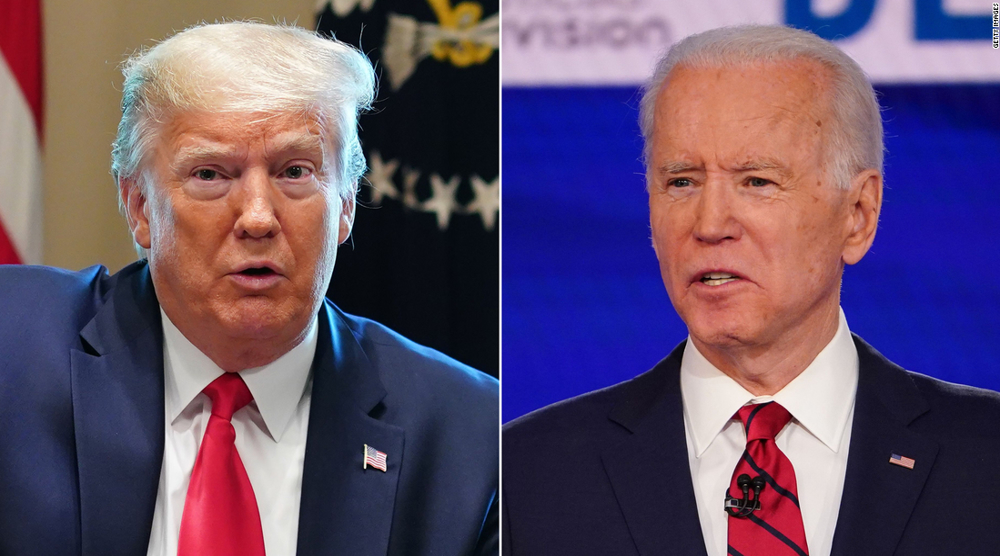
President-elect Joe Biden and outgoing President Donald Trump held duelling rallies in Georgia ahead of Tuesday’s critical US Senate runoffs that will determine the balance of power in Washington.
The Georgia races pit a pair of incumbent Republicans, Senators Kelly Loeffler and David Perdue, against Democratic challengers Raphael Warnock and Jon Ossoff, respectively.
Biden wants both Democrats to win so his party will control both houses of Congress when he takes office on January 20. Trump’s team wants Republicans to win so that, with Senate control, his party can block or curtail Biden’s legislative agenda.
Reporting from Atlanta, FRANCE 24’s Kethevane Gorjestani said both races were tight with the polls showing Republican and Democrat candidates within the margin of error, making it hard to say which party had the edge.
“The fact that both, Joe Biden and Donald Trump were here in Georgia with their respective candidates shows how important these two races are. What could be decisive is the turnout,” she noted.
More than 3 million Georgians have already cast their ballots, a state record of nearly 40% of registered voters opting for early voting.
‘Fight for Trump!’
Trump, a Republican who lost the November presidential election to his Democratic counterpart, has not conceded to Biden, and he spent part of his rally remarks in Dalton, a city in Georgia’s heavily Republican northwest, suggesting that he would try to hold on to power.
“They’re not taking this White House. We’re going to fight like hell,” Trump said to cheers from the crowd, which chanted “Fight for Trump!”
“Donald Trump is showing no signs of giving anything up. Throughout most of his speech during this rally, he attacked again Georgian election officials. He started the rally here with these words, ‘There is no way we lost Georgia’. He’s been attacking the integrity of the election process in Georgia, but at the same time he’s asking his base to come out and vote even though he thinks everything is rigged against him and against the candidates he’s supporting,” explained Gorjestani.
Biden criticised the outgoing administration for its handling of the pandemic and promised a fresh start for the country with Democratic control. More than 350,000 people have died from the coronavirus in the United States, and it is spreading rapidly in most states.
“It’s a new year, and tomorrow can be a new day for Atlanta, for Georgia and for America,” Biden said.
He said the Trump administration had “gotten off to a god-awful start” with the slow rollout of the Covid-19 vaccines. “The president spends more time whining and complaining than doing something about the problem,” he said.
Democratic candidates, if elected, would ensure that $2,000 stimulus checks were delivered to Americans as the economy struggles during the coronavirus pandemic, Biden said.
The outgoing president also put pressure on Vice President Mike Pence, who will receive the results of the state-by-state Electoral College in Congress on Wednesday, to take action in his favour. Biden beat Trump 306-232 in electoral votes and carried the popular vote by more than 7 million ballots.
“I hope Mike Pence comes through for us,” Trump said, referring to the vice president as a great guy. “If he doesn’t come through, I won’t like him quite as much,” Trump said.
Historic shift in Georgia
Long a solidly Republican state, Georgia surprised the nation in November by choosing Biden, the first time it had backed a Democratic presidential candidate in almost three decades.
That has raised liberals’ hopes for Warnock and Ossoff, although they face a tough battle in the still deeply conservative state. About 3 million have already voted.
A win by the two Democrats would hand the Senate to Biden’s party, as Vice President-elect Kamala Harris would hold the tiebreaking vote in the 50-50 chamber. That would make it easier for Biden to enact further coronavirus relief and tackle climate change, as Democrats also control the House of Representatives.
None of the Senate candidates won a majority in the November 3 election, which spurred the runoff elections.
Trump has continued to assert, without evidence, that his loss in November was the result of widespread voter fraud – a claim that reviews by state and federal election officials, multiple courts and the US Department of Justice have rejected.
In a call on Saturday to Georgia Secretary of State Brad Raffensperger that was recorded, Trump pressured the Republican official to “find” enough votes to overturn his defeat, and suggested Raffensperger’s failure to alter the November results could hurt Republican turnout in the Senate runoffs.
Democrats and election experts say Trump’s efforts almost certainly broke the law.
Biden, who won Georgia by almost 12,000 votes, did not mention the call directly in his remarks on Monday.
Loeffler, the senator who is contesting in Georgia, said on Monday night she would object to the certification of the election results in Congress on Wednesday, joining about a dozen other Republican senators and over 100 Republican House members. The move has virtually no chance of overturning Biden’s victory.
It is not clear whether Trump’s actions and his repeated claims of election fraud will affect the outcome of the Senate races. Strategists from both parties say the outcome could likely hinge on how many Republican voters participate on Tuesday, given strong Democratic early voting turnout.
The Senate campaigns have obliterated spending records and spurred unprecedented turnout, as political groups have flooded the state with a tsunami of advertising.
(FRANCE 24 with REUTERS)
















6, January 2021
Southern Cameroons Crisis: The U.S. Can Help Fill the Void 0
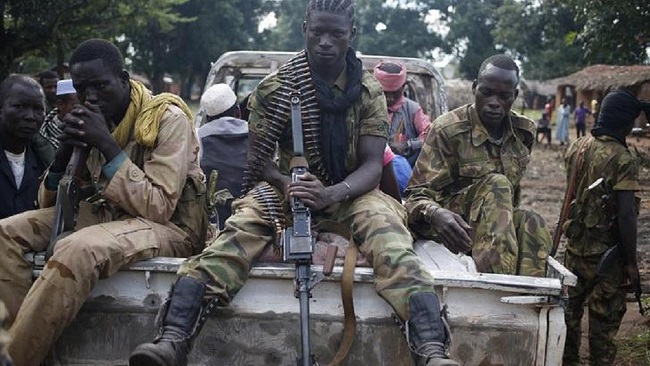
Over the last several years, since at least 2016, an inconceivably violent conflict has ravaged the Central African nation of Cameroon. The daily barrage of bloody images posted to social media and the accounts of cruelty and likely war crimes have – at least to date – not been enough to galvanize meaningful or concerted action to resolve what has become known as the Anglophone Crisis. After years of wreckage, there is now a domestic stalemate, a paralyzed status quo that has served to radicalize hardliners on both sides of the conflict.
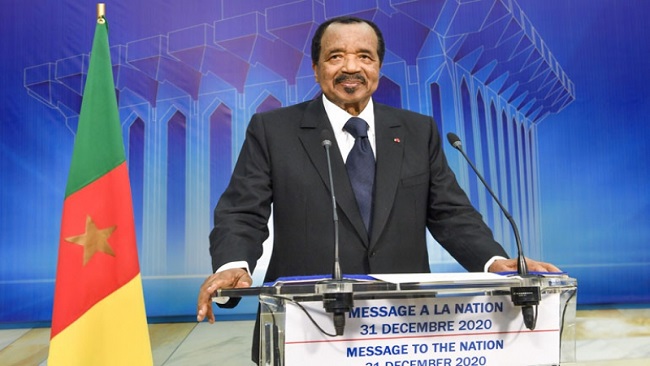
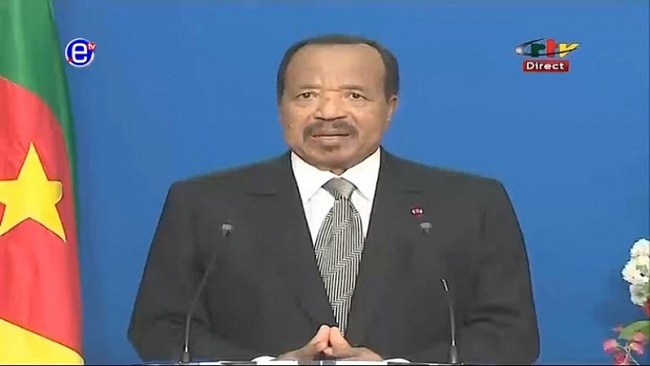
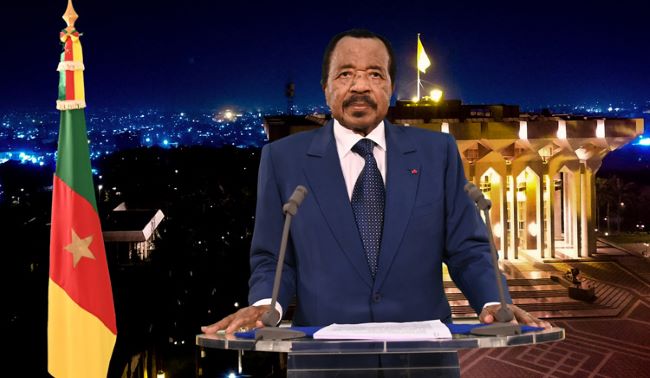
The roots of the Anglophone crisis date back much farther than 2016, of course. Like many long-simmering issues in the region, hostilities can be traced to the maneuvering of former colonial powers who spliced up African territories with little regard for the dignity or preferences of local populations. This fact, however, does not excuse the failed leadership that has more recently been the norm – embodied most profoundly by President Paul Biya, who has been in power since 1982, longer than most Cameroonians have been alive. In October 2018, Biya secured yet another term in office during an electoral exercise that was marred by credible allegations of vote rigging and a clampdown on political adversaries, including opposition leader Maurice Kamto, who had remained under house arrest until last month.
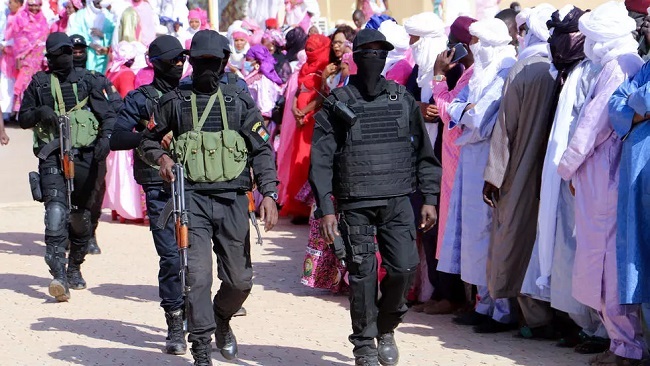
The Anglophone crisis has registered among the world’s most neglected,’ according to assessments by the Norwegian Refugee Council. And according to the International Crisis Group, the fighting has killed well over 3,000 people and displaced an additional 600,000 more. In Anglophone regions, an estimated 850,000 children are currently out of school – likely much higher today in light of the covid-19 pandemic – and one in three of the region’s four million people are in need of humanitarian aid. Cameroon, once a reputed host for refugees is now a major exporter of people who are fleeing violence and government persecution. The number of Cameroonians seeking refuge in neighboring Nigeria, for example, has crossed the 300,000 mark. The instability inside Cameroon has thus produced negative ripple effects on an entire region, including disastrous economic and commercial blowback.
These statistics, as staggering as they are, barely do justice to the overall magnitude of a conflict that has exacted a huge toll on the lives of ordinary Cameroonians – mainly women and children – who have literally been caught in the crossfire between government forces and Anglophone fighters. In the words of local journalist Comfort Mussa, “hardly a day goes by without news of deaths, abductions, arson attacks and other forms of violence that have become a reality for people in [Anglophone] regions.”
As 2021 gets underway, however, there is a small glimmer of hope that momentum has built behind a reform agenda. Rather symbolically, on New Year’s Day, the United States Senate passed a resolution (bit.ly/3rU9lf1) by unanimous bipartisan consent – no small feat in Washington these days – that sent a strong signal to the Biya government and armed groups alike to end the violence and to commit to an inclusive process of international arbitration. The resolution also raised the prospect of punitive sanctions on those individuals responsible for participating in atrocities. (This author has long called for these actions by the U.S. government, a significant donor to and enduring security partner of the Biya government).
As a longtime partner of human rights defenders and pro-democracy leaders in Cameroon, we at Vanguard Africa heartily welcome this development in the halls of the U.S. Senate. We will also advocate that the incoming Biden-Harris Administration make this resolution – and the key principles upon which it is premised – a key priority of its US-Africa policy moving forward.
Put simply, it is time for both sides of the Anglophone crisis to come to terms with the fact that there is no military solution. The guns need to be silenced. The chaos can no longer continue. Importantly, there is some recognition even among the most militant Anglophone leaders, that this is the only feasible way forward. What is needed today is a negotiated settlement that holds human rights violators accountable and paves the way for a new era of leadership that many Cameroonians are demanding.
The violence perpetrated during the Anglophone crisis, and the lack of respect for the sanctity of human life, has taken a massive toll on future generations of Cameroonians. To relieve citizens from this tailspin, both the government and Anglophone leaders need to take a hard look at this freefall and their respective roles in perpetuating it. A genuinely inclusive dialogue must begin, and the U.S. Government – now vitalized by a rare act of bipartisanship – should help to fill Cameroon’s leadership void that has been so readily exploited.
Source: Vanguard Africa